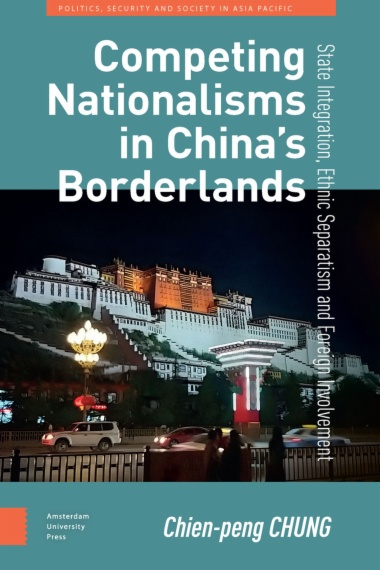
Competing Nationalisms in China’s Borderlands

Competing Nationalisms in China’s Borderlands

State Integration, Ethnic Separatism and Foreign Involvement

  • Author: Chung, Chien-peng
  • Publisher: Amsterdam University Press
  • ISBN: 9789048564897
  • Place of publication:  Amsterdam , Netherlands
  • Year of digital publication: 2025
  • Month: August
  • Pages: 332
  • Language: English
This book endeavors to provide a balanced analytical treatment of ethnic nationalists, state leaders, and foreign intervenors in China’s frontier politics, explaining systematically the circumstances of their entanglements, and traces in detail the underlying and lasting causes and effects of their association—from the closing years of the last Chinese imperial dynasty in the late nineteenth century to the present day.
Structured chronologically, the book offers in-depth analysis, comprehensively covering more than a hundred years of ethnic separatism, governance, and interventionism in the modern political history of China, using Tibetan, Uyghur, and Inner Mongolian case studies with a theoretical framework of internal colonialism/state integration.
Competing Nationalisms in China’s Borderlands is essential reading for students and instructors of undergraduate and graduate courses on China and acquisition for university and public libraries, and is also recommended for everyone else interested in China’s ethnic politics and its international dimensions.

  • Cover
  • Half Title
  • Series Page
  • Title Page
  • Copyright Page
  • Dedication
  • Table of Contents
  • Preface
    • References
  • Introduction
    • Nationalisms and China’s Ethnic Problem
    • Purpose of the Book
    • Analytical Framework: Internal Colonialism in the Service of State Integration
    • Organization of the Book
    • A Personal Note
    • References
  • Chapter 1: “Xinzheng”—“New Administration” in the Late Qing Dynasty (1902–11)
    • A Brief History of China’s Frontier Peoples
    • Xinzheng at the Frontier and the Rise of Han and Ethnic Nationalism in the Late Qing Dynasty
    • Manchuria (Northeast) under Xinzheng
    • Xinzheng in Mongolia
      • Xinzheng in Inner Mongolia: Application and Reaction
      • Xinzheng in Outer Mongolia: Application and Reaction
    • Xinzheng in Tibet (Central Tibet and Kham): Application and Reaction
    • Xinzheng in Xinjiang: Application and Reaction
    • Han-Chinese Self-Definition and Perception of Others
    • Ethnic Politics in the Late Qing Dynasty: The Beginning of Internal Colonialism as State Integration
    • References
  • Chapter 2: Separatists, Central Government, and Foreign Involvement in Republican China (1912–49)
    • The Frontier and the National Question in Republican China
    • An Overview of Non-Han Ethnic Nationalism in Republican China
    • Internal Colonialism versus State Integration: Devising Han-Chinese Penetration of Nationalist China’s Ethnic Frontiers
      • Political-Military Penetration
      • Economic Penetration
      • Socio-Cultural Penetration
    • Summary and Agenda for Further Research on Internal Colonialism/State Integration on Nationalist China’s Ethnic Borderland
    • References
  • 3. Case Studies of Separatism under the Republic of China Regimes (1912–49)
    • Manchuria
      • Northeast/Manchuria (1912–31)
      • Manchukuo/Manchuria (1932–45)
      • Northeast/Manchuria (from 1946)
    • (Outer) Mongolia
      • Outer Mongolia (1912–15)
      • Outer Mongolia (1915–19)
      • Outer Mongolia (1919–21)
      • Outer Mongolia (1921–45)
      • Outer Mongolia/Mongolia (from 1946)
    • Inner Mongolia
      • Inner Mongolia (1912–27)
      • Inner Mongolia (1927–36)
      • Inner Mongolia (1936–46)
      • Inner Mongolia (from 1947)
    • Xinjiang
      • Xinjiang (1912–33)
      • Turkish Islamic Republic of Eastern Turkestan/Xinjiang (1933–34)
      • Xinjiang (1934–44)
      • East Turkestan Republic/Xinjiang (1944–46)
      • Xinjiang (1946–47)
      • Xinjiang/Three Districts (1947–49)
      • Xinjiang (from 1950)
    • Tibet/Xizang
      • Outer/Central Tibet (1912–50)
    • Causes of Secession
      • The Special Case of (Central) Tibet (1950–59)
      • Tibet/Dharmsala (1959–89)
    • Lessons from the Case Studies
    • References
    • Map of the Republic of China
    • Map of the People’s Republic of China
  • Chapter 4: The Theory and Practice of Regional Autonomy for Minority Nationalities in the First Forty Years (1949–89) of the People’s Republic of China
    • The PRC’s Justifications for Internal Colonialism/State Integration
    • The PRC’s “National Question”
    • National Minorities: Who Are They and How Are They Defined
    • Assessing the Theory and Practice of Regional Autonomy
      • Why Regional Autonomy and not Federalism? The Marxist-Leninist Explanation
      • Regional Autonomy: For Which Minorities and for What Reasons?
      • What Constitutes Regional Autonomy in Practice?
      • Who Holds the Reins of Power in Autonomous Regions?
      • Why Were Minority Scripts Periodically Altered?
      • Redistribution—Which Way?
    • Rationales for Regional Autonomy
      • Concession to Past Realities
      • Sustenance of the Official Socialist Ideology
      • Protecting the National Territory
      • Keeping Minorities within the State
    • The National Question: Once Class, Nation Again
    • References
  • Chapter 5: Rising Ethnic Nationalism in China around the Millennium (1990–2007)
    • Ethnic Tension Following “Reform and Opening”
    • Ethnic Restlessness at the Turn of the Millennium
      • Tibet
      • Xinjiang
      • Sleeping Dogs and the “Three Evils” of Terrorism, Separatism, and Religious Fundamentalism: A Fine Balancing Act
    • China’s Minority Policies: Four Aspects
    • Foreign Attention to Ethnic Causes and PRC Counter-Measures
    • Ethnic Minority Grievances: Han Immigration and Wealth Disparities
    • The Causes of Ethnic Mobilization
      • Regional Differences and Ethnic Mobilization
      • Economic Competition and Ethnic Mobilization
      • “Preference Falsification” and Ethnic Mobilization
    • A Deceptive Lull amidst Ethnic Restlessness
    • References
  • Chapter 6: Heading for Ethnic Troubles (2007–10)
    • The Tibetan Riots
      • Tibet in the Hu Jintao Era
    • The Urumqi Riots
      • Xinjiang in the Hu Jintao Era
    • Managing Ethnic Nationalism in Inner Mongolia
    • Acculturation through Education
    • The Social Costs of Pursuing Integration
    • References
  • Chapter 7: Tibet and Xinjiang in a State of Securitization (Since 2010)
    • Self-Immolations in Tibet
      • Tibetan Self-Immolators
      • Official Chinese Responses
      • Foreign Reactions and Tibetan Nationalism among the Diaspora
    • China’s Persistent Uyghur Problem
      • The “Hard” Strategy of Repression
      • The “Soft” Strategy of Recompense
      • Between “Hard” and “Soft”: A “Middling” Strategy of (Combat)-Readiness
      • Resistance
      • Scant Evidence of Foreign Involvement
    • A Vicious Cycle of Ethnic Resistance and Official Reaction in Tibet and Xinjiang
    • Suppression in a State of Securitization and What Can Be Done
    • References
  • Chapter 8: Integration of Tibet and Xinjiang into Contemporary China : A Test of Propositions
    • Assessing the Internal Colonialism Paradigm
    • The Testing of Propositions
      • Political Domination
      • Economic Exploitation
      • Socio-Cultural Marginalization
    • What Does the Internal Colonialism/State Integration Paradigm Tell Us
    • Why the Internal Colonialism Debate Will Continue
    • References
  • Chapter 9: Conclusion
    • The Changing Rationales for Internal Colonialism/State Integration: Old Wine in New Bottles
    • Relating Nationalism to Patriotism
    • Separatist Activities, Foreign Involvement, and Central Government Control: The Contemporary Relationship
      • Separatist Activities
      • Foreign Involvement
      • Government Actions
    • Whither China’s Ethnic Situation: Amelioration or Exacerbation?
    • In Conclusion: Possible Future Scenarios
    • References
  • Index

Subjects

    SUBSCRIBE TO OUR NEWSLETTER

    By subscribing, you accept our Privacy Policy