
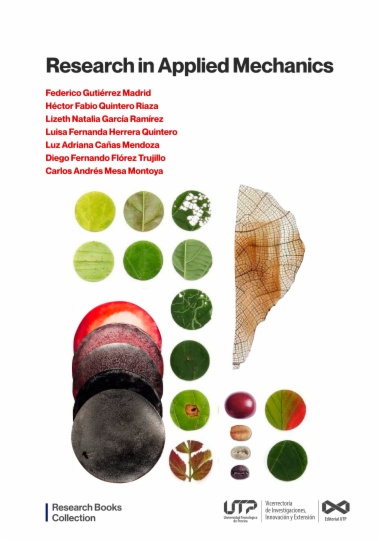
The volume addresses contemporary engineering challenges through practical solutions in agribusiness, sustainable materials, and fire safety. The first study examines the physico-mechanical properties of coffee cherries, specifically the Castillo and Colombia varieties, to optimize the design of pulping machinery. By measuring firmness and fracture force, researchers found that fracture resistance is significantly influenced by fruit size, variety, and compression orientation. These findings provide essential data for the agro-industry to improve post-harvest efficiency and reduce mechanical damage to the beans. The second research area focuses on transforming agricultural residues into eco-friendly materials by developing a biobased composite from plantain flour and lignocellulosic fibers from the peel. The study validates that a 3% fiber concentration optimizes the material's mechanical properties, offering a sustainable alternative to petroleum-derived plastics for applications such as packaging and promoting a circular economy. The third investigation utilizes computational simulation to analyze fires in informal dwellings in the Colombian Andean region, which are often built with vulnerable materials like bamboo (guadua) and woven bamboo panels (esterilla). Using Fire Dynamics Simulator (FDS), the study demonstrates that ventilation slits in the bamboo panels significantly increase flame spread by influencing the flow of unburned gases. These results offer critical insights for risk management and fire safety in vulnerable settlements. Collectively, this compendium aims to inspire collaboration and highlight the relevance of applied mechanics in solving complex problems to pursue a more sustainable development.
 Text
Text
 Audio
Audio
 Adobe DRM


 Login to your account