
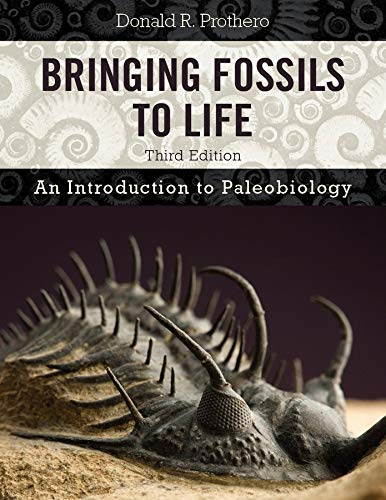
Bringing Fossils to Life Bringing Fossils to Life

Bringing Fossils to Life

An Introduction to Paleobiology

  • Autor: Prothero, Donald R.
  • Editor: Columbia University Press
  • ISBN: 9780231158923
  • eISBN Pdf: 9780231536905
  • Lugar de publicación:  New York , Estados Unidos
  • Año de publicación digital: 2013
  • Mes: Noviembre
  • Idioma: Ingles
New concerns with the intersections of culture and power, historical agency, and the complexity of social and political life are producing new questions about the United States’ involvement with Latin America. Turning away from political-economic models that see only domination and resistance, exploiters and victims, the contributors to this pathbreaking collection suggest alternate ways of understanding the role that U.S. actors and agencies have played in the region during the postcolonial period.

Exploring a variety of nineteenth- and twentieth-century encounters in Latin America, these theoretically engaged essays by distinguished U.S. and Latin American historians and anthropologists illuminate a wide range of subjects. From the Rockefeller Foundation’s public health initiatives in Central America to the visual regimes of film, art, and advertisements; these essays grapple with new ways of conceptualizing public and private spheres of empire. As such, Close Encounters of Empire initiates a dialogue between postcolonial studies and the long-standing scholarship on colonialism and imperialism in the Americas as it rethinks the cultural dimensions of nationalism and development.

  • Table of Contents
  • Preface
  • To the Student: Why Study Fossils?
  • PART I: THE FOSSIL RECORD
  • 1. The Fossil Record
    • What Is a Fossil?
    • How Does an Organism Become a Fossil?
    • What Factors Affect the Fossilization Potential of an Organism?
    • What Factors Are Required for Extraordinary Preservation?
    • How Good Is the Fossil Record?
    • Conclusions
  • 2. Variation in Fossils
    • Theme: Variation
    • How Do Organisms Vary During Their Lifespans?
    • How Do Populations of Organisms Vary?
    • Conclusions
  • 3. Species and Speciation
    • What Is a Species?
    • The Species Problem in Paleontology
    • Conclusions
  • 4. Systematics
    • Why Systematics?
    • Evolution and Classification
    • Competing Systematic Philosophies
    • Molecular Systematics
    • Codes of Systematic Nomenclature
    • Conclusions
  • 5. Evolution
    • The Evolution of Evolution
    • The "Evolutionary Synthesis"
    • Challenges to the Neo-Darwinian Synthesis
    • Evolution and the Fossil Record
    • Conclusions
  • 6. Extinction
    • The Fact of Extinction
    • The Causes of Extinction: Bad Genes or Bad Luck?
    • Background Extinctions, the Red Queen and the Court Jester
    • The Major Mass Extinctions
    • Is There a Common Cause?
    • Conclusions
  • 7. Functional Morphology
    • Form and Function
    • Theoretical Morphology
    • Functional Hypotheses as Testable Science
    • Case Studies in Functional Morphology
    • Conclusions
  • 8. Paleoecology
    • Ecology and Paleoecology
    • Ecological Relationships
    • Environmental Limiting Factors
    • Direct Paleoecological Evidence
    • Some Ecological Ideas That Have Been Applied (and Misapplied) to Fossils
    • Evolutionary Paleoecology
    • Conclusions
  • 9. Biogeography
    • Organisms In Space and Time
    • Ecological Biogeography
    • Historical Biogeography
    • Conclusions
  • 10. Biostratigraphy
    • Faunal Succession
    • Biostratigraphic Zonations
    • Factors Controlling Fossil Distributions
    • Biostratigraphic Sampling
    • The Time Significance of Biostratigraphic Events
    • Northamerican Land Mammal "Ages" and Biochronology
    • Quantitative Biostratigraphy
    • Resolution, Precision, and Accuracy
    • Index Fossils and th Biostratigraphic Standard
    • Conclusions
  • PART II: LIFE OF THE PAST AND PRESENT
  • 11. Life's Origins and Early Evolution
    • Concocting the "Primordial Soup"
    • Mud and Mosh Pits, Kittly Litter, and Fool's Gold
    • Life Is a Commune
    • The Earliest Fossils
    • Cambrian "Explosion" - Or "Slow Fuse"?
    • Why Did Life Change So Slowly Before the Cambrian?
    • Rocks, Hox, and Molecular Clocks
  • 12. Micropaleontology: Fossil Protistans
    • Introduction
    • The Kingdoms of Life
    • Foraminifera
    • Radiolaria
    • Diatoms
    • Coccolithopores
  • 13. Colonial Life: Sponges, Archaeocyathans, and Cnidarians
    • Introduction
    • Sponges
    • Archaeocyathans
    • Cnidarians
  • 14. The "Lophophorates" : Brachiopods and Byozoans
    • Introduction
    • Brachiopods
    • Bryozoans
  • 15. Jointed Limbs: The Arthropods
    • Introduction
    • Systematics
    • Trilobitomorpha
    • Chelicerata
    • Crustacea
    • Myriapoda and Insecta
  • 16. Kingdom of the Seashell: The Molluscs
    • Introduction
    • Systematics
    • Mollusc Origins and Diversification
    • Gastropods
    • Bivalves
    • Cephalopods
  • 17. Spiny Skins: The Echinoderms
    • Introduction
    • Systematics
    • Crinoids
    • Echinoids
  • 18. Dry Bones: Vertebrates and Their Relatives
    • Introduction
    • The Road to Amphioxus
    • Getting a Head: The Craniates
    • Jaws: The Gnathostomes
    • FIsh Bones: The Osteichthyans
    • Lobe-Fins: The Sarcopterygians
    • Four on the Floor: The Tetrapods
    • Land Eggs; The Amniotes
    • Feathered Dinosaurs: The Birds
    • Furry Folk: Synapsids and Mammals
  • 19. Fossilized Behavior: Trace Fossils
    • Introduction
    • Preservation
    • Classification
    • Ichnofacies
    • Ichnofabric
    • Trace Fossils Through Time
  • 20. Traces of the Earth's Green Mantle: Paleobotany
    • Introduction
    • Plant Taphonomy
    • The First Photosynthetic Organisms
    • The Plant Kindom
    • Vascular Plants
    • Tracheophytes
    • Naked Seeds: The Gymnosperms
    • Flower Power: The Angiosperm Revolution
    • Floras Through Time
  • Glossary
  • Bibliography
  • index

Materias

    SUSCRÍBASE A NUESTRO BOLETÍN

    Al suscribirse, acepta nuestra Politica de Privacidad