At five years old, Kristal Brent Zook sat on the steps of a Venice Beach, California, motel trying to make sense of her white father’s abandonment, which left her feeling unworthy of a man’s love and of white protection. Raised by her working-class African American mother and grandmother, Zook was taught not to count on anyone, especially men. Men leave. Men disappoint. In adulthood she became a feminist, activist, and “race woman” journalist in New York City. Despite her professional success, something was missing. Coming to terms with her identity was a constant challenge.
The Girl in the Yellow Poncho is Zook’s coming-of-age tale about what it means to be biracial in America. Throughout, she grapples with in-betweenness while also facing childhood sexual assault, economic insecurity, and multigenerational alcoholism and substance abuse on both the Black and white sides of her family. Her story is one of strong Black women—herself, her cousin, her mother, and her grandmother—and the generational cycles of oppression and survival that seemingly defined their lives.
Setting out on an inner journey that takes her across oceans and continents, Zook tells the story of a little girl who never gives up on love, even long after it seems to have been destroyed. In the end she triumphs, reconciling with her father and mother to create the family of her dreams through forgiveness and sheer force of will. A testament to the power of settling into one’s authentic identity, this book tells a story of a daughter’s lifelong yearning, a mother’s rediscovery of lost love, and the profound power of atonement and faith to heal a broken family.
- Half title
- Series Information
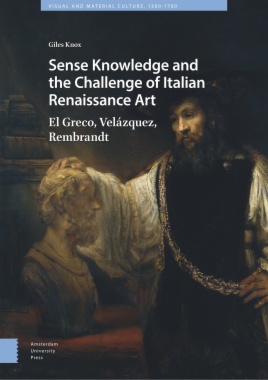
- Title page
- Copyright Information
- Table of Contents
- Acknowledgements
- List of Illustrations
- Introduction: Polemics of Painting
- Part One: Origin Stories and the Challenge of Italy
- 1. El Greco: Italy, Crete, Toledo
- 2. From El Greco to Velázquez: Juan Bautista Maíno
- Part 1: El Greco and Maíno
- Part 2: Velázquez and Toledo
- Part Two: Illusion, Materiality, Touch
- 3. Velázquez and Inversion: Making and Illusion
- The Spinners
- Las Meninas
- The Forge of Vulcan and Joseph’s Bloody Coat Brought to Jacob
- The Old Woman Cooking Eggs and Christ in the House of Mary and Martha
- 4. Vulcan, Mars, and Venus: Erotic Touch
- 5. Late Rembrandt I: Texture and the Skilled Touch
- Metalwork and Jewels
- Space and Skin
- The Touch of the Artist and the Legacy of Titian
- Conclusion
- 6. Late Rembrandt II: Feeling with the Eyes
- Touch, from the Erotic to the Familial
- Pain
- Reconciliation
- Insight
- Conclusion
- Conclusion
- Bibliography
- About the Author
- Index

 Texto
 Audio
 Adobe DRM


 Ingrese a su cuenta