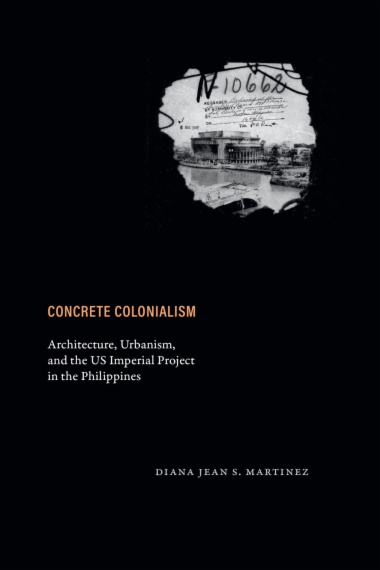
During US colonial rule in the Philippines, reinforced concrete was used to the near exclusion of all other building materials. In Concrete Colonialism, Diana Jean S. Martinez examines the motivations for and lasting effects of this forgotten colonial policy. Arguing that the pervasive use of reinforced concrete technologies revolutionized techniques of imperial conquest, Martinez shows how concrete reshaped colonialism as a project that sought durable change through the reformation of environments, colonial society, and racialized biologies. Martinez locates the origins of this material revolution in the development of Chicago, highlighting how building this urban center atop exceptionally challenging geology made it possible to transform diverse global ecologies. She details how the material’s stability, plasticity, strength, and other qualities served the shifting imperatives of the US colonial regime, playing a central role in defending territory, controlling disease, and constructing monuments to nation and empire. By describing a world irreversibly remade, Martinez urges readers to consider how colonialism persists—in concrete forms—despite claims of its conclusion.
- Cover
- Contents
- Preface and Acknowledgments
- Introduction
- 1. The “Master Material” and the “Master Race”
- 2. Stability: The Foundations of US Empire
- 3. Salubrity: Cholera and the “Housing Question” in the Tropical Colony
- 4. Reproducibility: The Burnham Plan and the Architecture of an “Efficient Machine”
- 5. Scalability: Altering the Archipelagic Interior
- 6. Liquidity: An Interlude on Portland Cement
- 7. Artifice: The “Bastard” Material and a Legitimation Crisis
- 8. Plasticity: Constructing Race, Representing the Nation
- 9. Strength: Defensive Architectures and Manila’s Destruction
- 10. Reconstruction: From Colonial Project to “Foreign Aid”
- Afterword
- Notes
- Bibliography
- Index



 Login to your account
