In The Whites Are Enemies of Heaven Mark W. Driscoll examines nineteenth-century Western imperialism in Asia and the devastating effects of "climate caucasianism"—the white West's pursuit of rapacious extraction at the expense of natural environments and people of color conflated with them. Drawing on an array of primary sources in Chinese, Japanese, and French, Driscoll reframes the Opium Wars as "wars for drugs" and demonstrates that these wars to unleash narco- and human traffickers kickstarted the most important event of the Anthropocene: the military substitution of Qing China's world-leading carbon-neutral economy for an unsustainable Anglo-American capitalism powered by coal. Driscoll also reveals how subaltern actors, including outlaw societies and dispossessed samurai groups, became ecological protectors, defending their locales while driving decolonization in Japan and overthrowing a millennia of dynastic rule in China. Driscoll contends that the methods of these protectors resonate with contemporary Indigenous-led movements for environmental justice.
- Cover
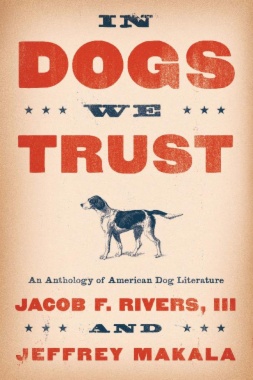
- In Dogs We Trust
- Title
- Copyright
- Dedication
- CONTENTS
- List of Illustrations
- Acknowledgments
- Introduction: Celebrating the American Dog
- PART 1 Working Dogs
- Heroes of Fire and Water: I.—“Sport,” the Newark Fire Dog (1881)
- Heroes of Fire and Water: II.—“Gunner,” the Children’s Rescuer (1881)
- The Cow-Boys and the Dogs, in the War of the Revolution (1865)
- The Faithful American Dog (1798)
- Sagacity of a Dog (1831)
- A Canine Anecdote (1861)
- Pershing Honors Dog Mascot of A.E.F. (1921)
- Another Dog (1895)
- Craig, an Appreciation (1916)
- A Pleasant Instance of the Sagacity of a Dog (1781)
- The Shepherd’s Dog (1845)
- When Eyes Were No Use (1920)
- The Bar Sinister (1902)
- That Spot (1908)
- PART 2 Sporting Dogs
- The Setter, an Aristocrat among Dogs (1920)
- Memoir of a Celebrated Setter Dog (1831)
- Dog Knew a Sportsman (1906)
- That First Bird Dog (1913)
- A Lesson in Faithfulness (1919)
- A Walt Whitman Grouse (1916)
- Sportsmen’s Dogs—the Setters (1897)
- Mac: The Story of a Dog of Honor (1920)
- Some Dogs That I Have Owned (1901)
- Do Dogs Dream? (1882)
- The Working Airedale in Colorado (1910)
- About a Setter Dog (1902)
- PART 3 Poetry about Dogs
- Epitaph on a Dog (1773)
- A Dog (1934)
- Dan (1921)
- The Fate of an Innocent Dog (1845)
- What shall I do – it whimpers so (ca. 1861)
- Elegy on the Death of Fidelio, a Dog Who Possessed More Merits Than the Poet Has Deigned to Ascribe to Him (1795)
- Tumbler’s Epitaph (ca. 1840)
- An Untitled Poem about Sailor (1845)
- The Dog Star Pup (1920)
- My Dog (1918)
- To My Dog, “Quien Sabe” (In the Happy Hunting Grounds) (1920)
- Sonnet for My Dog (ca. 1939)
- My Dog (1897)
- The Good, True Dog (1913)
- To a Dog’s Memory (1889)
- PART 4 Companion Dogs
- The Animal Mind (1913)
- From The History of New England from 1630 to 1649 (1644)
- From the Journals of the Lewis and Clark Expedition (1805)
- Stickeen (1909)
- Testimony of James Smith, Field Hand, Enslaved in Virginia and Georgia. Interviewed by Henry Bibb (1852)
- A Yellow Dog: A California Story (1895)
- A Dog’s Ghost: A Story from the Tobique River, New Brunswick (1892)
- Memoirs of a Yellow Dog (1906)
- A Dog’s Story (1898)
- From “Our Dogs” (1867)
- My Dog (A Hamlet in Old Hampshire) (1901)
- Thoughts on Dogs (1793)
- In Praise of Mops (1892)
- Dogs (1829)
- The Fidelity of a Dog (1903)
- One Minute Longer (1919)
- The Education of Sam (1900)
- The Reform of Shaun (1903)
- Where Is My Dog? or, Is Man Alone Immortal? (1892)
- Gulliver the Great (1912)
- Coda: All the Good Dogs (1954)
- Index

 Text
 Audio
 Adobe DRM


 Login to your account